Machu Picchu: The Enduring Mystery of the Inca Citadel in the Andes
Machu Picchu: The Enduring Mystery of the Inca Citadel in the Andes
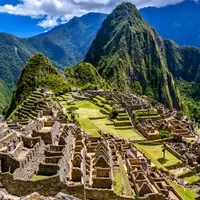
Perched high in the Andes Mountains of southern Peru, Machu Picchu stands as one of the most extraordinary archaeological sites in the world, both for its breathtaking natural setting and for the enduring mysteries surrounding its purpose, construction, and abandonment. Hidden for centuries beneath dense cloud forest vegetation, this ancient Inca citadel remained largely unknown to the outside world until its international introduction in the early twentieth century. Today, Machu Picchu is widely regarded not only as a masterpiece of ancient engineering but also as a powerful symbol of human adaptation to extreme landscapes. Unlike many ancient monuments built on open plains or near major rivers, Machu Picchu occupies a remote mountain ridge nearly 2,430 meters above sea level, suggesting that its location was chosen with deliberate intent rather than convenience. The site’s isolation, combined with the absence of clear historical records left by the Incas themselves, has fueled decades of academic debate and public fascination. Was it a royal estate, a religious sanctuary, an astronomical observatory, or a combination of all three? The answers remain incomplete, but each stone, terrace, and pathway offers insight into the sophistication of a civilization that thrived without iron tools, wheeled transport, or written language as we understand it today.
Geographic Setting and Strategic Design
Machu Picchu’s geographic position is as remarkable as its architecture. Surrounded on three sides by the Urubamba River and shielded by steep mountain slopes, the site appears almost naturally fortified. This strategic placement would have offered protection from external threats while maintaining access to fertile agricultural zones below. The Incas were masters of landscape integration, and Machu Picchu exemplifies this philosophy. Rather than reshaping the mountain entirely, builders carved and adjusted stone to align with the natural contours of the ridge. Terraces cascade down the slopes, preventing erosion while creating arable land for crops such as maize and potatoes. These agricultural terraces were not merely functional; they also contributed to the stability of the entire site, acting as a sophisticated drainage system during heavy Andean rains.
Architectural Precision Without Mortar
One of the most striking features of Machu Picchu is its stonework. Massive granite blocks were cut, shaped, and assembled with extraordinary precision, often fitting together so tightly that a blade of grass cannot be inserted between them. This technique, known as ashlar masonry, allowed structures to withstand seismic activity common in the region. Despite the absence of mortar, the walls have remained largely intact for centuries. This level of craftsmanship reflects a deep understanding of material properties and structural physics, achieved without modern measurement tools. Doors and windows were often trapezoidal in shape, a design choice that increased stability and resistance to earthquakes.
Cultural and Spiritual Significance
Beyond its physical construction, Machu Picchu held profound cultural and spiritual meaning for the Inca civilization. Many scholars believe the site was closely linked to astronomical observation. Structures such as the Intihuatana stone appear aligned with solar events, including solstices, suggesting ceremonial functions tied to the Inca sun god, Inti. The careful orientation of buildings toward sacred mountains, or apus, further supports the idea that Machu Picchu functioned as a ritual center. In Inca belief systems, mountains were living entities with spiritual power, and Machu Picchu’s integration into this sacred landscape reinforced its symbolic importance.
Abandonment and Rediscovery
Despite its grandeur, Machu Picchu was abandoned less than a century after its construction, likely during the period of Spanish conquest. Interestingly, there is little evidence of destruction, which suggests the inhabitants may have left voluntarily, possibly due to disease or political collapse elsewhere in the empire. Because the Spanish never discovered the site, Machu Picchu avoided the large-scale dismantling that affected many other Inca cities. When it was brought to global attention in 1911, it was already partially reclaimed by nature, contributing to its image as a “lost city.” This rediscovery transformed Machu Picchu into a focal point for archaeological research and global tourism.
Legacy in the Modern World
Today, Machu Picchu is recognized as a UNESCO World Heritage Site and remains one of the most visited historical landmarks on Earth. Its legacy extends beyond tourism; it serves as a case study in sustainable architecture, environmental adaptation, and cultural resilience. As preservation efforts continue, Machu Picchu challenges modern societies to reconsider how ancient knowledge systems can inform contemporary approaches to construction, environmental management, and cultural preservation. The site endures not merely as a relic of the past, but as a living testament to human ingenuity in harmony with nature.